
 Written and reviewed by Emily Daza, licensed health insurance advisor, NPN 21284721 · Updated November 2, 2026
How do hairstylists and barbers in Florida get health insurance?
Most buy their own. Booth renters, suite renters and salon owners are self-employed, so no employer plan comes with the chair. Their options are a private plan or an ACA Marketplace plan. Commission stylists on a W-2 may get a salon plan, but it ends when they leave. Emily Daza, a bilingual licensed advisor in Plantation, quotes private PPO plans for healthy beauty pros in Miami-Dade, Broward and Palm Beach.
Why health insurance is hard to sort out behind the chair
- You moved from commission to booth rent, and the salon plan you had went away with the paycheck.
- Your income is a mix of services, product sales and tips, and the Marketplace asks you to guess a yearly number.
- December and Mother's Day are packed; August is slow. Your premium is the same every month.
- You're on your feet ten hours a day, your wrists and back hurt, and you keep putting off the doctor.
- You opened your own suite or salon and realized the health insurance bill is yours now too.
- You'd rather have it explained in Spanish, by WhatsApp, between clients, not in an office during your busiest hours.
How Emily helps beauty professionals
- Private PPO plans for healthy people. Plans with broad networks where you can usually see a specialist without a referral, quoted on your ZIP code, age and who needs coverage.
- A plan you own. It isn't tied to a salon, so it stays in place when you switch shops, go from commission to booth rent or open your own suite.
- Quotes on your schedule. Call, text or WhatsApp 954-695-4250 before the first client or after the last one, in English or Spanish.
- Honest about ACA plans. Emily only sells private PPO plans. If you have a pre-existing condition or your income qualifies for a large subsidy, she'll tell you and point you to HealthCare.gov.
- Family included. Coverage for you, your spouse and your kids, plus dental and vision if you want it.
- Health insurance only. Emily does not sell salon liability, booth renter or business insurance; this is coverage for your health. Get a free quote.
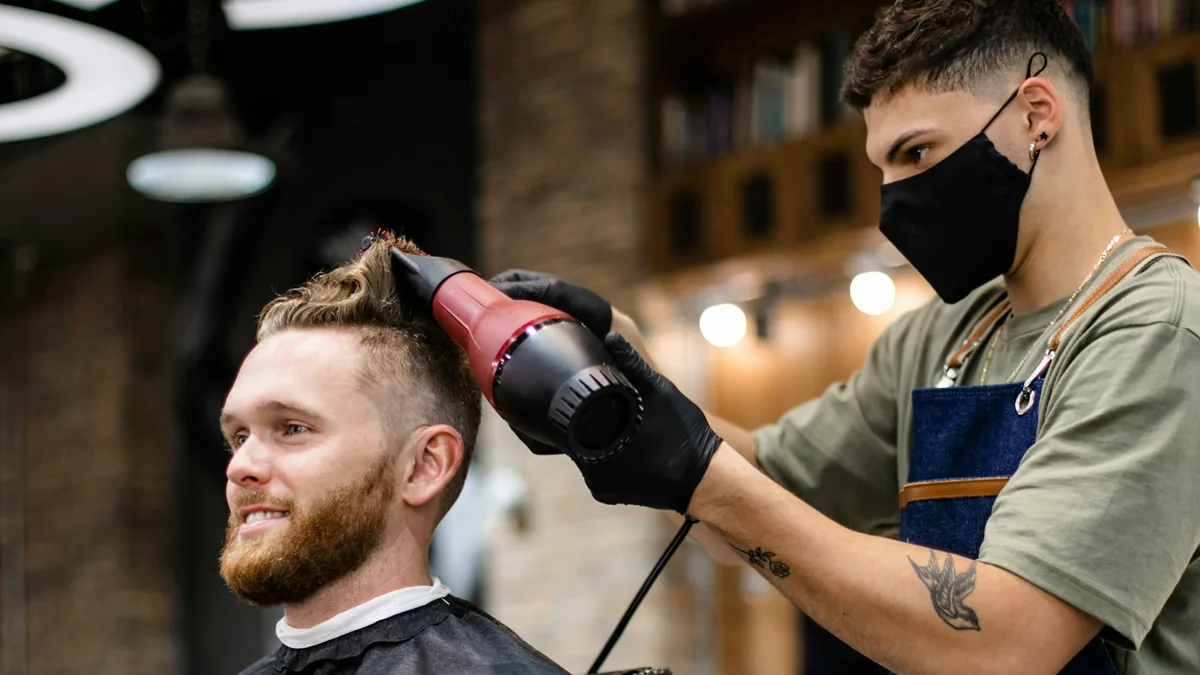
Booth renter, commission stylist or salon owner: where does your coverage come from?
Barbers, hairstylists and cosmetologists held about 670,800 jobs in the U.S. in 2025, with a median pay of $35,880 a year. About 80% of barbers and 48% of hairdressers, hairstylists and cosmetologists are self-employed, and schedules often include evenings and weekends. Source: BLS Nail techs are less often on their own, about 23%, but booth and suite rental is common there too. Source: BLS
How you're paid decides where your health insurance comes from. A commission or hourly stylist on a W-2 is an employee. If the salon offers a group plan, that is usually the first option, and it ends when the job does. A booth or suite renter pays rent for the space and keeps what they charge. For tax purposes that is a 1099 business, and the salon owes them no health plan. A salon owner is a business owner and buys coverage for themselves and their family.
Your Florida license doesn't change any of this. The Board of Cosmetology licenses cosmetologists and registers nail, facial and full specialists Source: Florida DBPR, and the Barbers' Board licenses barbers and barbershops. Source: Florida DBPR A license lets you work; it doesn't come with health insurance. Renters and owners have the same choice as other self-employed people: a private plan or an ACA Marketplace plan. Health insurance for 1099 workers in Florida.
Tips, slow months and your income estimate
If you apply for an ACA Marketplace plan, the subsidy is based on a guess: your income for the year you're getting coverage, not last year's. Self-employed people estimate their net self-employment income, after business expenses. Source: HealthCare.gov Tips count as income in that estimate, and if your income is irregular you report what you earn now and update the application as it changes. Source: HealthCare.gov
That is harder than it sounds for a stylist. Cash and card tips, product sales, booth rent going out, supplies, and a slow summer after a busy holiday season all move the number. Estimate too low and you may have to pay back part of the subsidy at tax time; estimate too high and you pay more each month than you needed to. Keep your appointment book and your deposits, and report changes when they happen.
There is also a federal deduction for qualified tips for 2025 through 2028, up to $25,000 a year, and self-employed people in tipped occupations can qualify, with limits. Source: IRS Ask your tax preparer whether it applies to you. Emily doesn't give tax advice.
A private PPO works differently: there is no subsidy and no income estimate. The price depends on your age, ZIP code and health answers. For a healthy stylist whose income is too high or too unpredictable for a large subsidy, that is often simpler. If a big subsidy is likely, the Marketplace is usually the better deal, and Emily will say so. Private health insurance vs ACA in Florida.
Your body is your business: what that means for coverage
Beauty work is physical. Barbers usually stand for long periods, and prolonged exposure to some chemicals can cause skin irritation, which is why many wear gloves and protective clothing. Source: BLS Nail techs work with chemicals daily and often wear gloves and masks. Source: BLS
Back and foot pain, sore wrists and shoulders, and rashes from color or acrylics are the kind of problems that get worse when you wait. When every hour out of the chair is money lost, it is easy to skip the appointment. A plan that covers preventive care and lets you see a dermatologist or orthopedist without a long chase for referrals makes it easier to deal with small problems before they take you off the floor.
Know what health insurance does not do: it pays for medical care, not for the income you lose if an injury keeps you out of work. That is a separate kind of coverage. Some people add supplemental benefits, such as accident coverage, on top of a health plan. Supplemental coverage. Before you apply for anything, ask how a plan handles the doctors, prescriptions and creams you already use.
PPO or HMO: which works better for a beauty pro?
An HMO usually limits coverage to doctors who work for or contract with the HMO, and generally won't cover care outside the network except in an emergency. Source: HealthCare.gov A PPO pays more if you use in-network providers but still lets you see out-of-network doctors, usually at a higher cost, without a referral. Source: HealthCare.gov
For someone who works Tuesday through Saturday and books clients late, flexibility matters. Being able to go straight to a dermatologist about a reaction to a product, or to an urgent care near the salon on a Monday, saves time you'd otherwise lose from your book. Many beauty pros in South Florida also live in one county and work in another, say Hialeah and Doral, or Pembroke Pines and Fort Lauderdale. Check that the network covers both. PPO vs HMO in Florida, in detail.
What happens to your coverage when you change salons?
Stylists and barbers move a lot: to a busier shop, from commission to booth rent, into a salon suite or their own space. If you're on a salon's group plan, it usually ends with the job. Losing job-based coverage opens a special enrollment window on HealthCare.gov: you can enroll within 60 days before or 60 days after you lose it. Source: HealthCare.gov Miss it and you may wait until Open Enrollment.
A plan you buy yourself avoids that cycle. Your clients follow you when you move; your health plan should too. That is the main reason Emily suggests beauty pros own their coverage instead of depending on whoever owns the building. Losing employer coverage.
Salon owners: covering yourself first
If you own the salon and rent chairs to independent stylists, they run their own businesses and buy their own coverage. You still need a plan for yourself and your family. HealthCare.gov considers you self-employed if your business takes in income but has no employees; if you have even one employee besides yourself, a spouse, family member or owner, the SHOP Marketplace may be an option for your team. Source: HealthCare.gov
Emily's focus is the owner: a private PPO for you and your family that doesn't depend on how many stylists you have this year. If you're thinking about benefits for W-2 staff, start a separate conversation. Small business coverage.
Owners and renters may also be able to deduct their premiums. The IRS self-employed health insurance deduction is figured on Form 7206 Source: IRS; it can't be taken for any month you were eligible for an employer-subsidized plan, including a spouse's, and it's limited by your business's net earnings. Source: IRS Ask your tax preparer how it applies to you.
Commission stylist vs booth renter vs salon owner: coverage compared
Who pays, who chooses and what happens when you move.
| Commission or hourly (W-2) | Booth or suite renter (1099) | Salon or barbershop owner | |
|---|---|---|---|
| Where coverage usually comes from | The salon's group plan, if offered | Your own private or ACA plan | Your own private or ACA plan |
| Who pays the premium | Shared with the salon | You | You (your business) |
| When you change salons | Group plan usually ends; 60-day special enrollment window | A plan you own stays in place | Not affected; a plan you own stays in place |
| Income for an ACA estimate | Wages and tips | Net business income, including tips | Net business income |
| Self-employed premium deduction | Not usually | May qualify (IRS Form 7206) | May qualify (IRS Form 7206) |
| Who helps you | The salon owner or benefits contact | Emily quotes private PPO plans; HealthCare.gov for ACA | Emily quotes private PPO plans; HealthCare.gov for ACA |
How it works
- Ten-minute call, text or WhatsApp. Your ZIP code, who needs coverage, how you work (commission, booth rent, suite or owner) and the doctors you want to keep.
- Emily checks the fit. Your health and income picture, so she knows whether a private PPO fits or an ACA plan is the better route.
- Networks and numbers side by side. Monthly premium, deductible and whether your doctors are in network, in English or Spanish.
- Enroll, then keep it when you move. Emily stays your contact and reviews your plan every year.
Who is behind this guide?
- Emily Daza, licensed health insurance advisor, NPN 21284721, licensed in 31+ states.
- Rated 5.0 on Google by real clients, and has helped thousands of people find coverage.
- $2.3M+ in sales, all 4 Hope Awards and the Beacon Award, leading a team of 8, top 3 in her region.
- Born in Colombia and fluent in Spanish, working from 8050 SW 10th St, Plantation, FL. Call, text or WhatsApp 954-695-4250.
Keep exploring
- Coverage: Self-employed · Individual · Family plans · Dental & vision · Supplemental
- Guides: Private vs ACA · Open Enrollment · FAQ · All guides
- More articles: Health insurance for 1099 workers · PPO vs HMO in Florida · Cost of health insurance in Florida
- Near you: Miami-Dade County · Broward County · Palm Beach County · Hialeah · En español